
You've noticed your child hesitating when they read. Maybe they avoid reading aloud, or they seem to guess at words instead of sounding them out. You're wondering: is this normal, or is something deeper going on?
No worries. If you're asking these questions, you're already paying attention to the right things. Early reading struggles: especially with phonics: are incredibly common in Grades 1-6. The good news? When caught early, phonics challenges respond really well to focused support.
Here's what we'll cover:
Ontario's Language curriculum expects students to develop strong decoding skills early. By the end of Grade 1, children should be able to use letter-sound relationships to read unfamiliar words. By Grade 3, they should read smoothly and automatically.
Phonics is the foundation for all of this. It's how children learn to connect letters with sounds, blend those sounds into words, and eventually read fluently.
When phonics skills don't develop on schedule, reading becomes harder and harder. Students fall behind in all subjects because they can't access grade-level texts. Research shows that 86% of struggling readers have difficulties specifically with phonological awareness and decoding: the core phonics skills.
The earlier you spot the warning signs, the easier it is to close the gap.

Your child knows their ABCs but struggles to tell you what sound each letter makes. They might confuse similar-sounding letters like "b" and "p" or "m" and "n."
This is the most fundamental phonics skill. If your child can't reliably match letters with their sounds by the middle of Grade 1, they need targeted phonics instruction.
When you say "cat, hat, mat," your child doesn't notice the pattern. They can't come up with their own rhyming words, or they struggle with simple rhyming games and songs.
Rhyming shows that children can hear the sound patterns in words: an essential skill that comes before phonics. If rhyming is still hard in Grade 1 or 2, it's a red flag.
You say "cat," and your child can't tell you the three separate sounds: /c/ /a/ /t/. They hear the word as one blob of sound instead of individual phonemes.
This skill, called phonemic awareness, is what allows children to decode new words. Without it, phonics instruction won't stick.

Your child knows that C says /k/, A says /a/, and T says /t/. But when you ask them to put those sounds together, they can't arrive at "cat."
Blending is the active decoding process. If your child can't blend by the end of Grade 1, reading will feel like an impossible puzzle.
Reading is painfully slow. Your child hesitates on every word, even ones they've seen many times before. They might struggle to quickly name letters, numbers, or colors too.
Fluent readers recognize common words automatically. If your child is still sounding out basic words like "the" or "and" in Grade 2 or 3, their phonics foundation needs strengthening.
When your child encounters an unfamiliar word, they freeze. Instead of trying to sound it out, they guess based on the first letter or skip it entirely.
Decoding unfamiliar words is the whole point of phonics. If your child consistently avoids this strategy, they haven't internalized the skills they need.
Your child says reading is "too hard" or "boring." They feel embarrassed to read aloud. They might even have meltdowns when it's time for homework.
This emotional response often signals underlying phonics struggles. When reading feels like constant failure, children naturally want to avoid it.

Ontario's curriculum builds reading skills systematically across the elementary years. By Grade 3, students write the EQAO assessment, which includes reading comprehension tasks. Students who haven't mastered phonics by then often struggle significantly.
Here's what the province expects:
When phonics skills lag behind, students can't meet these benchmarks. They fall further behind with each grade. The reading gap widens instead of closing.
Don't wait for the next parent-teacher interview. Early action makes a big difference.
Start with these steps:
Talk to your child's teacher. Ask specifically about phonics skills. Request concrete examples of what your child can and can't do. Find out what phonics instruction looks like in the classroom.
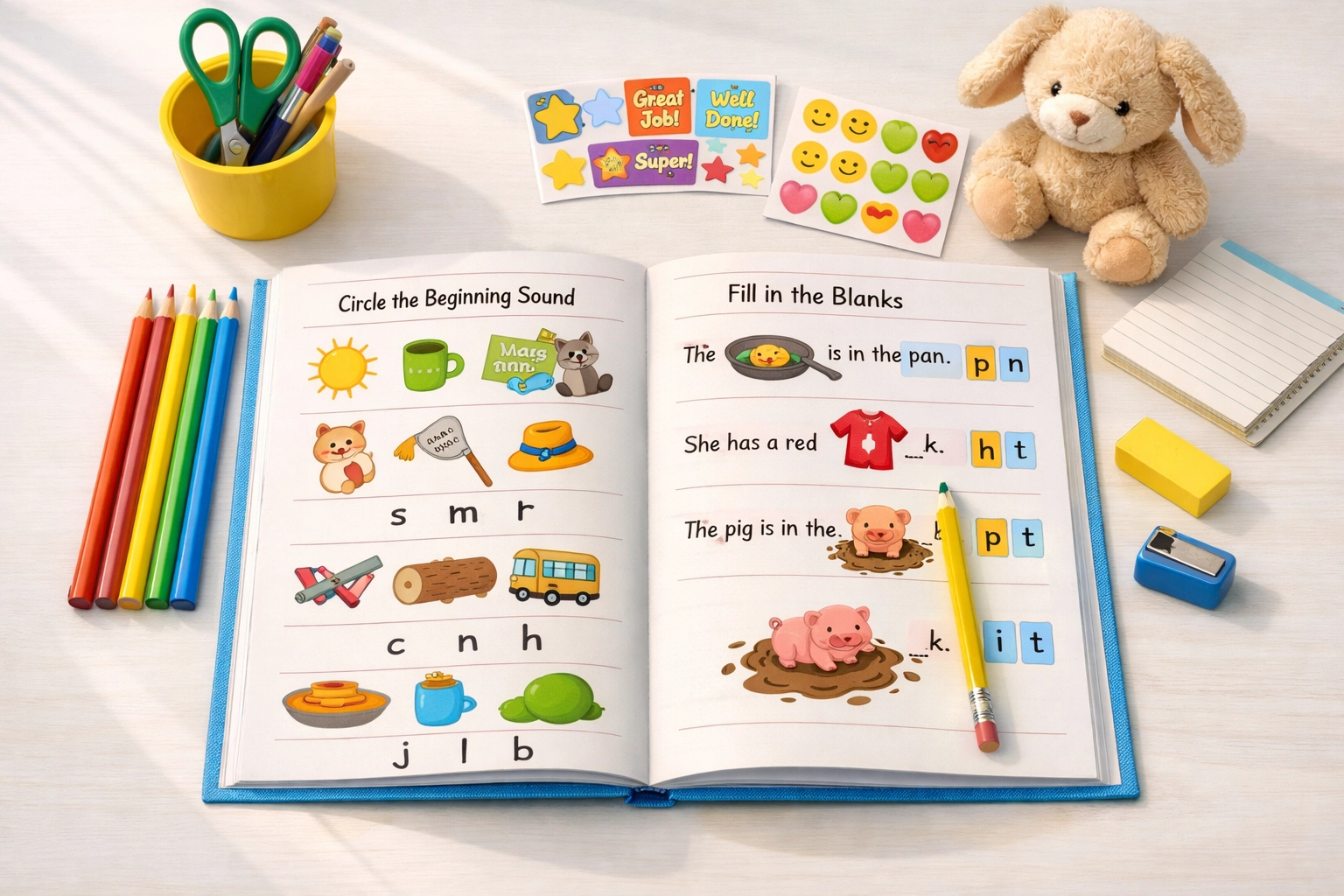
Practice phonics games at home. Spend 10-15 minutes daily on sound activities: rhyming, sound matching, blending practice. Make it playful, not stressful.
Read aloud together. Let your child follow along as you read. Point to words. Model how to sound out tricky words without pressure.
Consider a phonics assessment. A literacy specialist can pinpoint exactly which phonics skills are missing and create a targeted intervention plan.
Be patient and positive. Phonics struggles are not a reflection of intelligence. With the right support, most children make strong progress within 8-12 weeks of focused instruction.
If your child shows 3 or more of these warning signs, or if reading avoidance is affecting their confidence and school performance, it's time to get expert support.
A qualified tutor who specializes in phonics and early literacy can:
Most students need 2-3 sessions per week for 8-12 weeks to see noticeable improvement. Some children need longer-term support, especially if they're working multiple grade levels behind.
The investment pays off. Strong phonics skills don't just improve reading: they boost writing, spelling, and overall academic confidence.
Is it too late if my child is already in Grade 4 or 5?
No. While earlier intervention is ideal, phonics instruction helps students at any age. Older students often make faster progress because they're more motivated and can understand explicit instruction. Many Grade 4-6 students close their reading gaps within one school year with consistent support.
Should I be worried if my child only shows one of these signs?
One sign alone may not be a major concern, but it's worth monitoring. If the issue persists for more than a few months, or if you notice any decline in reading confidence, check in with the teacher. Prevention is always easier than remediation.
Can online phonics programs replace tutoring?
Apps and programs can be helpful for practice, but they can't replace personalized instruction: especially for struggling readers. A tutor can identify exactly why your child is stuck and adjust the approach in real time. Think of apps as useful supplements, not substitutes for expert teaching.
If you recognize your child in these warning signs, here's your action plan:
Email your child's teacher today. Request a brief conversation about phonics skills and reading progress.
Try one phonics game this week. Play rhyming games during car rides. Practice blending sounds while cooking ("Can you blend /sh/ /o/ /p/? Shop!").
Book a literacy assessment if needed. Don't wait months to see if things improve on their own. Early, targeted support changes everything.
Phonics struggles are common, but they're also solvable. With the right support at the right time, your child can become a confident, capable reader. Small steps now lead to big gains later.