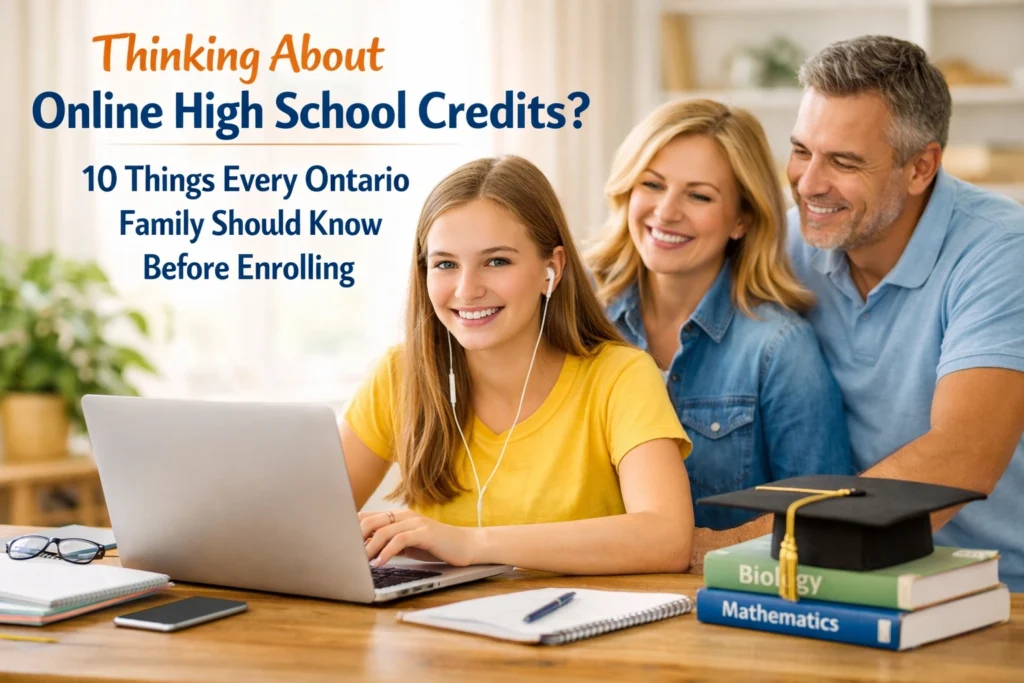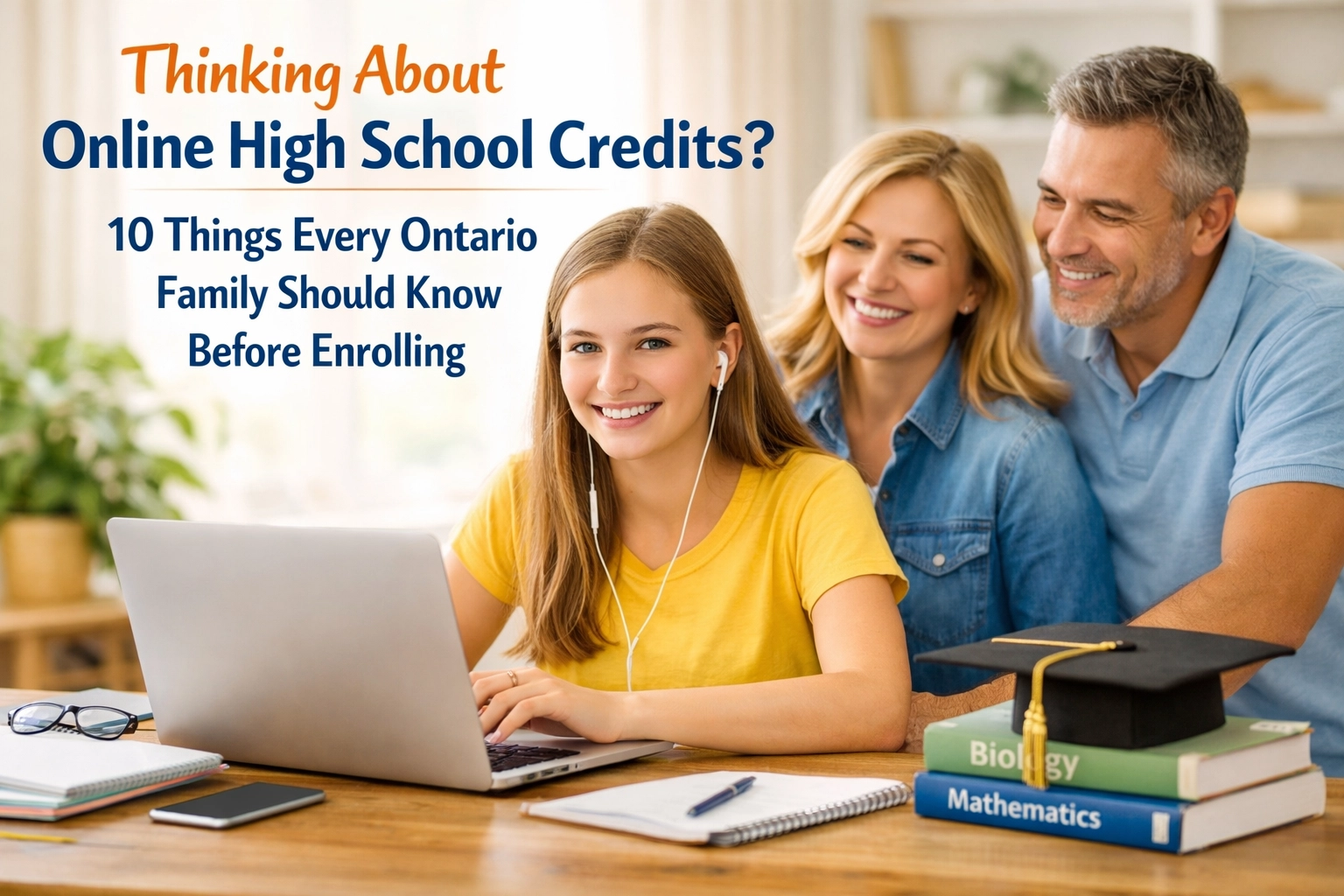

If you're a parent of a high school student in Ontario, you've probably heard something about online learning credits being required for graduation. Maybe your teen mentioned it, or you saw it in a school newsletter. Either way, you might be wondering what this actually means for your family.
Don't worry, online credits aren't as complicated as they might sound. In this post, we'll break down the 10 most important things Ontario families need to know about online high school credits. You'll learn about the requirements, how online courses actually work, and what questions to ask before your child enrolls.
Here's the basic rule: students who started Grade 9 in the 2020-2021 school year or later need to earn 2 online learning credits to graduate with their Ontario Secondary School Diploma (OSSD).
If your child started high school before September 2020, this requirement doesn't apply to them. They can still take online courses if they want to, but they won't be mandatory for graduation.
The provincial government added this requirement to help students develop digital learning skills. In today's world, being comfortable with online learning platforms is becoming just as important as knowing how to write an essay or solve an equation.

This might surprise you: even though online credits are technically "mandatory," students can withdraw from this requirement by submitting a simple opt-out form to their school.
There's no penalty for opting out. Your child won't lose any credits or face consequences. The school won't even ask why you're opting out: no explanation needed.
Why does this option exist? The Ministry of Education recognizes that online learning doesn't work for everyone. Some students have accessibility needs, unreliable internet access, or simply learn better in a traditional classroom setting. The opt-out option ensures no student is disadvantaged by this requirement.
Here's where it gets a bit tricky. Just because a course is delivered online doesn't automatically mean it counts toward the 2-credit e-Learning graduation requirement.
Courses taken through the TDSB Virtual Secondary School, for example, don't count toward this requirement. However, asynchronous e-Learning courses offered by other school boards do count: including summer programs.
When you're enrolling your child in an online course, specifically ask: "Does this count toward the provincial e-Learning graduation requirement?" The school administration can confirm this for you. It's a simple question that can save confusion later.
Many parents hear "online course" and picture their child sitting in Zoom classes all day. That's not how Ontario's e-Learning courses work.
Ontario e-Learning courses are asynchronous, which means students don't need to be online at specific times. Instead, they access course materials: readings, videos, discussion boards, assignments: whenever it fits their schedule.
Think of it more like a guided independent study. Your child logs in when it works for them, completes the work at their own pace (within deadlines), and communicates with their teacher through email, discussion posts, or scheduled check-ins.
This flexibility is actually one of the biggest benefits. A student can work on their online course at 7 AM before school, during a spare period, or on weekends. It fits around their schedule instead of dictating it.

Just because courses are asynchronous doesn't mean students are on their own. Every online course has a certified Ontario teacher who provides instruction, feedback, and support throughout.
Here's what teacher involvement looks like in practice:
Your child should expect to hear from their online teacher regularly, not just when they submit assignments. Good online teachers check in proactively, especially if they notice a student falling behind or struggling with concepts.
Traditional courses often rely heavily on final exams. Online courses in Ontario use a different approach.
Assessment in e-Learning courses is continuous. Teachers evaluate students throughout the entire course based on assignments, projects, discussion participation, and other work submitted along the way. This means students get feedback they can actually use to improve, not just a final grade that arrives after the course is over.
There may still be culminating tasks or final projects, but they're usually weighted as just one component of the overall grade. The emphasis is on showing growth and understanding over time.
This assessment style can actually reduce test anxiety for some students. Instead of one high-pressure exam determining their grade, they have multiple opportunities to demonstrate what they've learned.
Here's a special accommodation that applies to a specific group of students: if your child was in Grade 9 during the province-wide school closure from April to June 2021, one credit they earned remotely during that period can count toward the 2-credit requirement.
This recognizes that many students got an unexpected crash course in remote learning during the pandemic. If this applies to your child, check with their guidance counselor to make sure this credit is properly noted on their transcript.

Beyond meeting the graduation requirement, online credits offer practical advantages that work particularly well for certain students.
Online courses can be ideal for:
At Aim High Consulting, we've seen families use online credits strategically. For example, taking a required course like Grade 9 Health and Physical Education online frees up in-person periods for courses that benefit more from hands-on instruction, like sciences or arts.
All online courses that count toward graduation requirements must be approved by the Ontario Ministry of Education. This isn't some Wild West situation where anyone can create an online course.
Ministry-approved courses must:
When choosing an online course provider, verify Ministry approval. Reputable providers will clearly display this information and can provide course codes that match official curriculum documents.
This is important: the 2 online credits don't replace other graduation requirements. They're in addition to everything else your child needs.
Your child still needs:
The online credits are just 2 of those 30 total credits. Think of them as a specific type of credit that must be completed online, but they count toward the overall total just like any other course.

Before your child signs up for their first online course, have a conversation with them and with the school. Here are the key questions to ask:
For your child:
For the school or course provider:
Online credits are now a standard part of Ontario high school education. For most students, they'll complete these requirements without issue and might even discover they enjoy the flexibility of online learning.
If you're still unsure whether online courses are right for your child, consider starting with just one course rather than two at once. This gives them a chance to adjust to the format and develop time management skills in a lower-pressure situation.
At Aim High Consulting, we help Ontario families navigate high school requirements, including online credits. Whether you need help choosing the right courses, staying on track with asynchronous learning, or understanding graduation requirements, we're here to support your family's success.
The most important thing? Don't wait until Grade 12 to figure this out. Understanding the online credit requirement early gives your child more options and reduces last-minute stress. Start the conversation now, and you'll set your teen up for success.